

By using our website, you agree to the use of cookies as described in our Cookie Policy
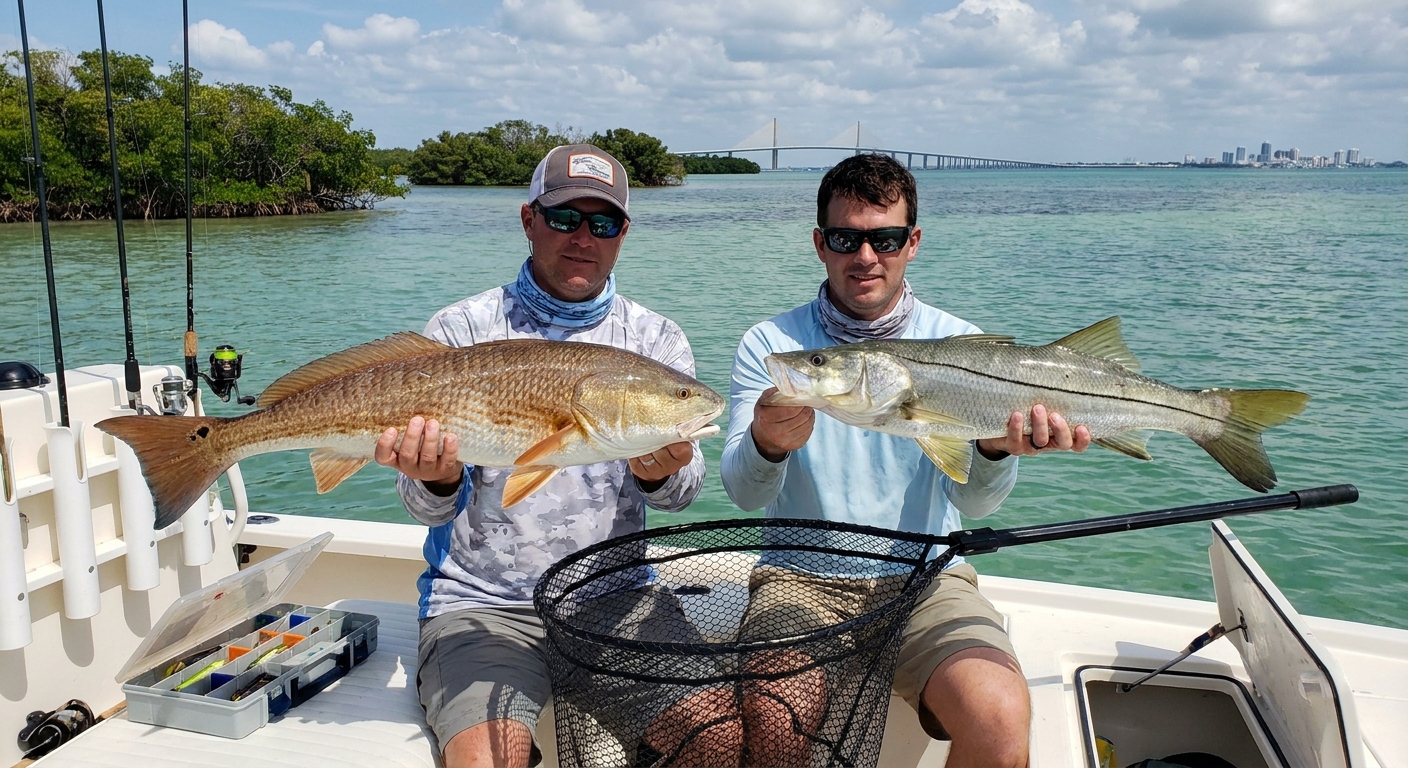
Most anglers think you've got to pick a lane. Either you're chasing redfish or you're hunting snook — not both. But Tampa Bay doesn't work that way. The estuary is built for overlap, and if you know where to look and when to go, you can load the cooler with both species before lunch. It's not luck. It's reading water, timing tides, and knowing what each fish wants when the conditions line up.
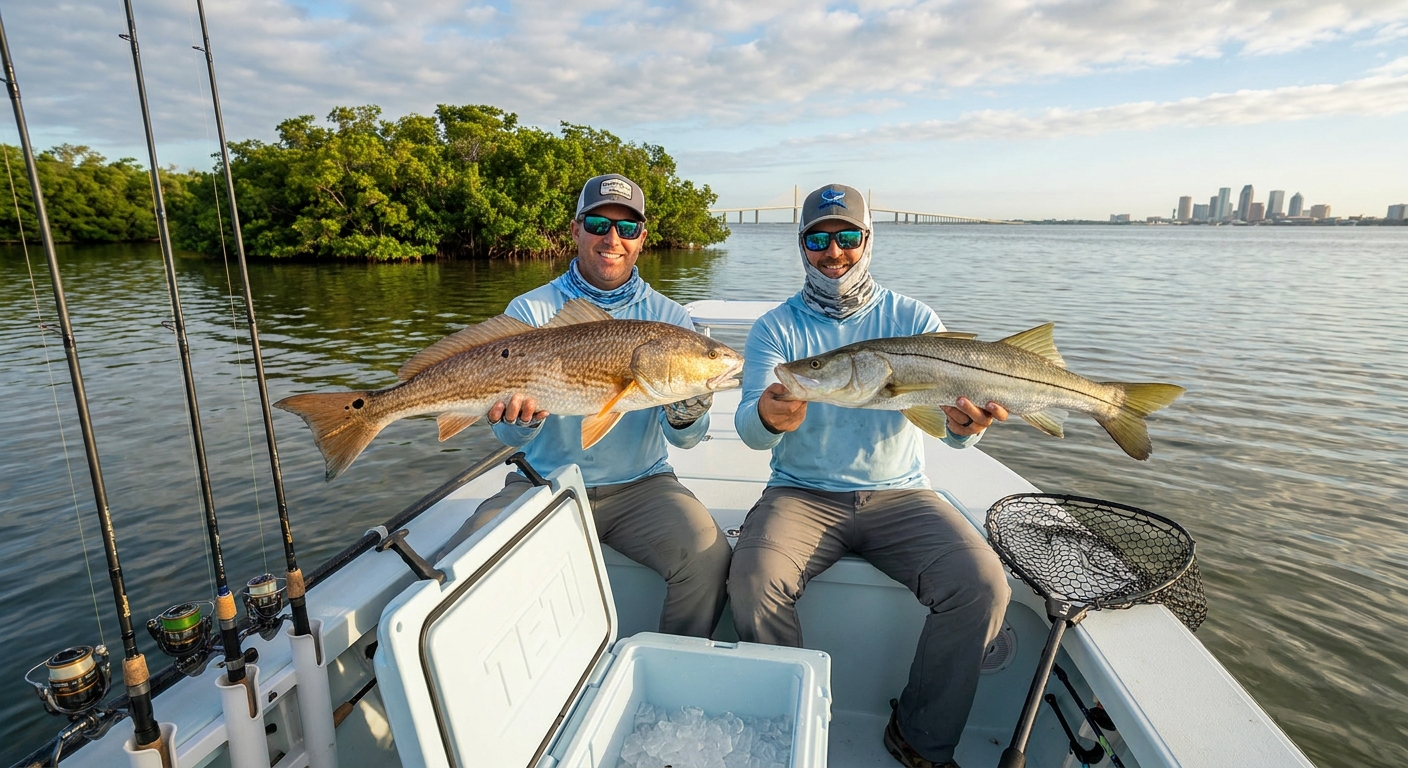
We've watched too many trips fall apart because someone assumed redfish and snook live in different worlds. They don't. They share grass flats, mangrove cuts, and oyster structure. The trick is fishing the zones where their routines collide — and doing it with the right gear, the right bait, and zero guesswork.
Both Species Play the Same Real Estate
Redfish cruise grass flats and oyster bars hunting crabs and shrimp. They tail in skinny water, push wakes through potholes, and feed hard when the tide's moving. Snook sit tight near structure — mangrove roots, dock pilings, channel edges — waiting to ambush whatever swims past. Different tactics, sure. But the habitats? They cross more than most people realize.
When the tide floods a shoreline or drains a flat, both species move into the same feeding zones. Redfish nose into the shallows. Snook slide out from cover. That window is where you double up — if you're there when it happens and you're throwing the right stuff.
Tide and Temperature Drive the Bite
Forget the calendar. Focus on the tide chart. Moving water triggers feeding, and both redfish and snook respond to the same current shifts. Rising tides push bait into the shallows and pull predators with it. Falling tides concentrate everything near deeper cuts and channels. Either direction works — as long as something's happening.
Water temperature matters too. Snook go dormant when it drops below the mid-60s. Redfish tolerate cooler water but still slow down. Late spring through early fall gives you the cleanest shot at both, especially when morning and evening tides align with prime feeding windows. Plan around those overlaps and you're already ahead of most boats on the water.
One Setup Handles Both Fights
You don't need separate rods for redfish and snook. A medium-action spinning setup with 15-pound braid and a 25-pound fluorocarbon leader covers both. The braid gives you sensitivity and casting distance. The fluoro keeps snook from sawing through your line on mangrove roots and keeps redfish from seeing the connection.
Bait choice is just as flexible. Live pilchards, threadfins, or finger mullet work for both species. So do shrimp and pinfish. On the artificial side, soft plastics in natural colors, paddletails, and topwater plugs all produce. The key is matching the size and profile to what's in the water that day — and being ready to switch if one species is keyed in on something specific.
Where to Start Your Search
Tampa Bay is massive, but you don't need to fish all of it. Focus on areas where structure meets current and shallow water transitions to depth. We've had our best dual-species days around the mangrove islands near Weedon Island, the grass flats stretching out from Fort De Soto, and the oyster bars tucked into Cockroach Bay. These zones hold bait, provide ambush points, and see consistent tidal flow.
Look for visible signs before you even make a cast. Birds working baitfish. Mullet flipping. Nervous water along a shoreline. Those clues tell you where the food is — and where the predators are stacked up. Work the edges first, then fan out into the flats or potholes depending on the tide stage.
Tactics That Produce Both Species
- Cast tight to mangrove edges on a rising tide and let the current pull your bait along the structure
- Work potholes and depressions on the flats during falling water when bait gets funneled into tight zones
- Use topwater plugs early and late in the day when both species are actively feeding near the surface
- Switch to slower presentations in deeper cuts or under docks when the sun's high and fish are less aggressive
- Keep your approach quiet and your casts long to avoid spooking fish in clear, shallow water
Reading Conditions in Real Time
Conditions change fast in Tampa Bay. Cloud cover can flip the bite from sluggish to explosive. Wind direction affects water clarity and bait movement. Even minor shifts in current speed can pull fish on or off a flat. We don't fish by feel — we fish by watching what's happening and adjusting before the window closes.
If the topwater bite dies, drop down to a soft plastic. If the grass flat goes quiet, slide over to the nearest mangrove line or oyster bar. Both redfish and snook move throughout the day, and the anglers who stay mobile and read the signs are the ones who connect with both species consistently.
Handling and Release Standards
- Wet your hands before touching any fish to protect their slime coat
- Keep the fish in the water as much as possible during the release process
- Use circle hooks when fishing live bait to reduce deep hooking and improve survival rates
- Revive exhausted fish by holding them upright in the water and moving them gently until they swim off strong
- Know the slot limits and seasons for both species and follow them without exception
Mistakes That Cost You Fish
We see the same errors repeated on the water. Anglers fish one depth or one structure type all day instead of adapting to where the fish are actually feeding. They set up too close and spook everything before the first cast. They ignore the tide chart and wonder why nothing's biting. Or they bring the wrong leader and lose fish to cutoffs or break-offs that were completely avoidable.
Another big one? Not switching baits or lures when the bite slows. If redfish are crushing shrimp but snook want a swimming plug, you've got to adjust. Stubbornness doesn't catch fish. Flexibility does. And so does showing up prepared with backup options already rigged and ready to throw.
Gear and Prep That Matters
- Carry extra leaders pre-tied in different pound tests so you can adapt without wasting time
- Pack a variety of lure colors and styles to match changing light and water clarity
- Bring a quality net with rubber mesh to minimize damage during the landing process
- Keep a pair of pliers and a dehooking tool within arm's reach at all times
- Wear polarized sunglasses to spot fish, structure, and bait before you're on top of them
Why Guides and Locals Consistently Double Up
The best anglers on Tampa Bay aren't lucky — they're informed. They know which flats fish best on which tides. They know where snook stage during spawn season and where redfish school in the fall. They've logged enough hours to recognize patterns that weekend warriors miss. And they adjust their strategy every single trip based on what the water's telling them that day.
You don't need decades of experience to catch both species in one trip, but you do need to fish smart. That means studying tide tables, scouting productive areas, and being willing to move when a spot goes cold. It also means respecting the resource and handling every fish like it's the last one you'll catch.
Why This Bay Rewards Preparation
Tampa Bay gives you every advantage. The habitat diversity is unmatched. The bait supply is year-round. The tidal flow creates predictable feeding windows. But none of that matters if you show up without a plan. Redfish and snook are both available on the same water — but catching them together requires more than hope and a lucky cast.
We've put both species in the boat more times than we can count, and the common thread is always the same. Show up during moving water. Fish the zones where structure and bait intersect. Stay mobile and ready to adapt. Do that, and Tampa Bay fishing charters will deliver what you came for — without making you choose between redfish and snook. You can have both. Just bring the right mindset and the skills to back it up.
Ready to Chase Redfish and Snook?
We know Tampa Bay inside and out, and there’s nothing better than seeing our guests double up on redfish and snook in a single outing. If you want to maximize your chances and fish smarter, let’s plan your next adventure together. Give us a call at Book Your Next Tampa Fishing Charter and let’s get you on the water for a trip you won’t forget.
‹ Back