



By using our website, you agree to the use of cookies as described in our Cookie Policy
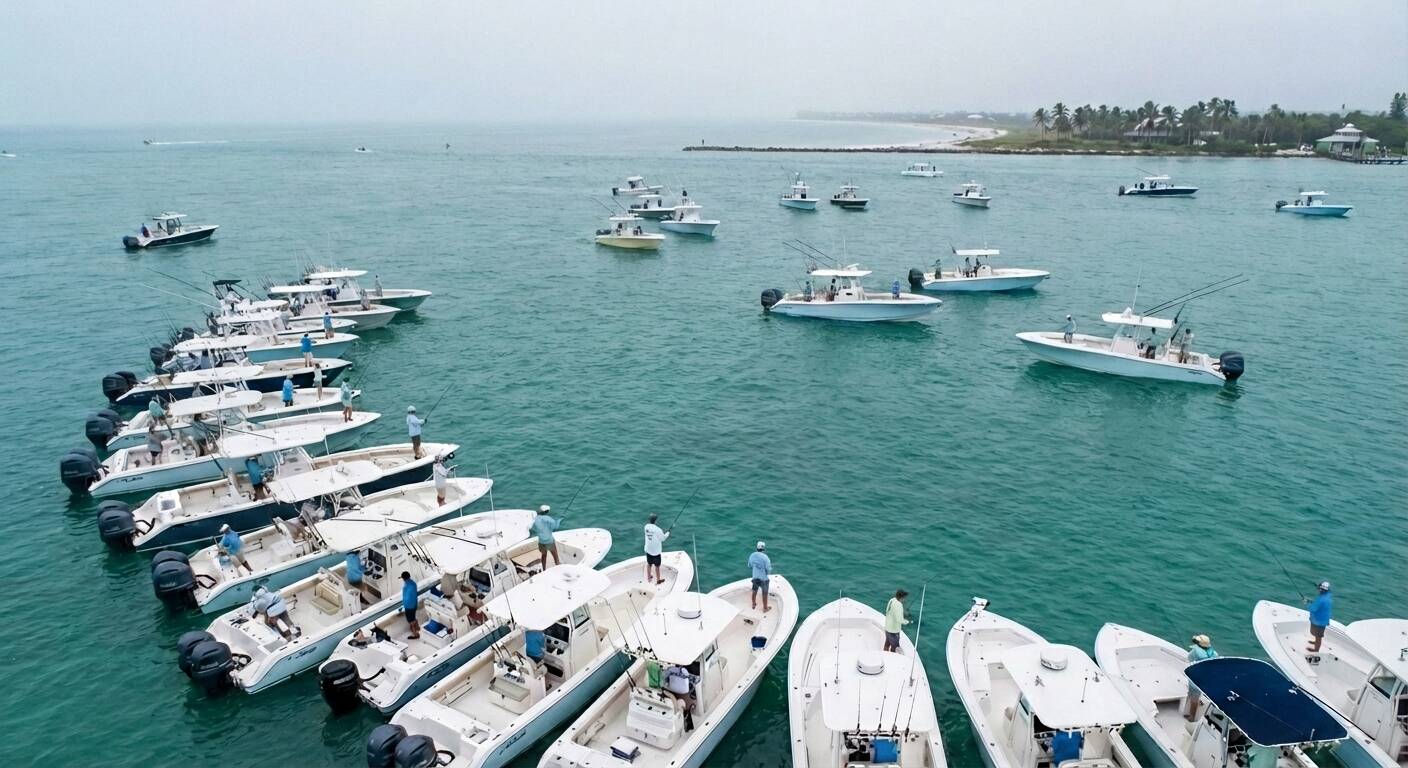
Boca Grande isn't just another fishing spot. It's the place where tarpon show up in numbers that make anglers forget about everything else. But here's the reality most people don't talk about until they're stuck in a flotilla of boats: this fishery gets packed. Not just busy—legitimately crowded. And if you don't understand why that happens or when to expect it, you're setting yourself up for frustration before you even wet a line.
The crowds aren't random. They follow patterns tied to fish behavior, weather windows, and the calendar. Some days you'll have room to work. Other days you'll be shoulder-to-shoulder with a hundred other captains, all chasing the same rolling fish. Knowing what drives the congestion helps you decide whether to push through it or plan around it entirely.
Migration Timing Dictates Everything
Tarpon don't live in Boca Grande year-round. They migrate through, and that migration window is what turns the pass into a circus. Fish start trickling in around April, but the real surge hits between May and July. During those months, thousands of tarpon funnel through the area, stacking up in predictable zones where the current and structure align.
When the fish are there, so is everyone else. Guides who've been running these waters for decades know the peak weeks down to the day. Recreational anglers check reports and see the action heating up, then they load the boat and head south. The result? A concentration of effort that turns prime fishing grounds into a traffic jam with rods.
Tournaments Bring the Chaos
Boca Grande hosts some of the most prestigious tarpon tournaments in the country. Events like the World's Richest Tarpon Tournament pull competitors from across the map, and they don't show up alone. Support boats, media crews, and spectators all add to the congestion. Tournament days can see boat counts double or triple compared to a normal weekend.
The competitive element changes the vibe too. Anglers aren't just fishing—they're fighting for position, trying to get their baits in front of fish before someone else does. It's intense, and it's crowded. If you're planning a trip and want to avoid the madness, check the tournament schedule first. Those dates are non-negotiable if you value elbow room.
Weather Windows Pack the Pass
Tarpon fishing is weather-dependent, and so are the crowds. Calm seas, clear skies, and favorable tides create ideal conditions—and everyone knows it. When the forecast lines up with a strong moon phase or a good tide swing, expect company. Lots of it.
Rough weather or poor visibility keeps casual anglers off the water, but it doesn't stop the fish from being there. We've seen some of the best fishing happen on days when most people stayed at the dock. The trade-off is dealing with less-than-perfect conditions, but if you're serious about avoiding crowds, those are the windows to target.
Social Media Amplifies the Pressure
Twenty years ago, word spread slowly. Now? One viral video or Instagram post showing a big tarpon jumping in Boca Grande, and the next weekend looks like a boat show. Social media has made it easier than ever for people to track the bite, and that accessibility has consequences.
Charter operations have expanded to meet demand, which means more boats are available for hire. That's great for access, but it also means more traffic. Even anglers without their own rigs can book a fishing charter and join the fray. The barrier to entry has dropped, and the pass reflects that shift every season.
Regulations Try to Manage the Madness
Local authorities and conservation groups have stepped in with rules designed to protect the fishery and improve the experience. Catch-and-release mandates, restricted zones, and guidelines for ethical angling are all part of the framework now. These measures help, but they don't eliminate the crowds—they just manage them.
Enforcement varies, and not everyone follows the rules. We've seen boats anchor in no-anchor zones, crowd other anglers, and ignore spacing guidelines. The regulations are there, but they only work if people respect them. That's on all of us.
Strategies for Dodging the Mob
- Fish the shoulder months like late April or early August when tarpon are still around but the peak rush has passed
- Hit the water at dawn or dusk when most boats are still tied up or heading in
- Explore the backcountry flats and alternative zones outside the main pass
- Avoid tournament dates entirely if you're not competing
- Hire a guide who knows how to work around pressure and find less-crowded water
Accessibility Cuts Both Ways
Boca Grande sits within easy reach of Tampa, Fort Myers, and Naples. That proximity is a blessing and a curse. It means you can make a day trip without burning half a tank of gas just getting there. It also means thousands of other anglers can do the same thing.
The infrastructure supports the traffic—ramps, marinas, bait shops, and lodging are all built to handle the influx. But that doesn't change the fact that the fishery itself has finite space. More boats mean tighter quarters, and tighter quarters mean more conflict over positioning and etiquette.
What the Crowds Mean for Your Trip
- Expect to share space with other boats, especially during peak hours and peak season
- Plan for longer wait times at boat ramps and fuel docks
- Be ready to adjust your strategy if your preferred spot is already occupied
- Bring patience and respect for other anglers—tempers flare when space is tight
- Consider alternative species or locations if the tarpon scene feels too chaotic
Local Knowledge Matters More Than Ever
Guides who run Boca Grande daily know how to navigate the crowds. They understand tide windows, fish movement, and where to position when the pass is packed. That knowledge is worth paying for, especially if you're new to the area or only fish it occasionally.
DIY anglers can still succeed, but it requires homework. Study the tides, watch the weather, and scout alternative spots before you commit to a plan. The more you know going in, the better your odds of finding fish without fighting through a wall of boats.
Conservation Keeps the Fishery Alive
- Handle tarpon quickly and carefully to minimize stress
- Use circle hooks and appropriate tackle to reduce injury
- Follow all catch-and-release guidelines without exception
- Respect restricted zones and seasonal closures
- Report violations to local authorities to help protect the resource
Timing Your Trip Around Reality
You can't eliminate the crowds entirely, but you can minimize your exposure. Early-season trips in April offer solid fishing with fewer boats. Late-season windows in July and August still produce fish, but the heat and afternoon storms thin out the fleet. Midweek trips almost always see less pressure than weekends.
If you're flexible with dates, use that to your advantage. Avoid holiday weekends, tournament weeks, and the absolute peak of the migration. You'll still catch fish, and you'll do it without the headache of navigating a hundred other boats in the same square mile.
What to Expect When You Show Up
- Boat traffic will be heaviest from late May through mid-June
- Weekends and holidays see significantly more pressure than weekdays
- Prime tidal windows attract the most boats, regardless of the day
- Tournament days can feel like a parking lot on the water
- Early mornings offer the best chance at space before the crowd arrives
The Trade-Off Between Access and Experience
Boca Grande's popularity is both its strength and its weakness. The fishery is world-class, and the access is unmatched. But that combination draws pressure, and pressure changes the experience. Some anglers thrive in the chaos, treating it like a competitive sport. Others find it exhausting and look for quieter alternatives.
Neither approach is wrong. It's about knowing what you're walking into and deciding whether it's worth it. The tarpon are there, and they're as impressive as advertised. But so are the crowds, and they're not going anywhere. If you're looking to experience tarpon fishing in Boca Grande with an experienced captain who knows how to navigate the pressure and position you for success, our captain brings decades of local knowledge to every trip. We run fishing boats in Tampa Bay equipped to handle the conditions and the crowds, and we understand what it takes to make the most of your time on the water. Whether you're targeting tarpon or exploring other species like Tampa mangrove snapper, we'll put you in position to succeed. Plan accordingly, fish smart, and don't let the congestion ruin what should be an incredible day on the water.
Let’s Make Your Next Tarpon Trip Unforgettable
We know how much a well-planned day on the water means, especially when the crowds are thick and the fish are running. If you want to maximize your chances and enjoy a smooth, memorable tarpon adventure, let’s team up and put our local expertise to work for you. Give us a call at 813-727-9890 or book your next tampa fishing charter—we’re ready to help you experience Boca Grande at its best.
‹ Back